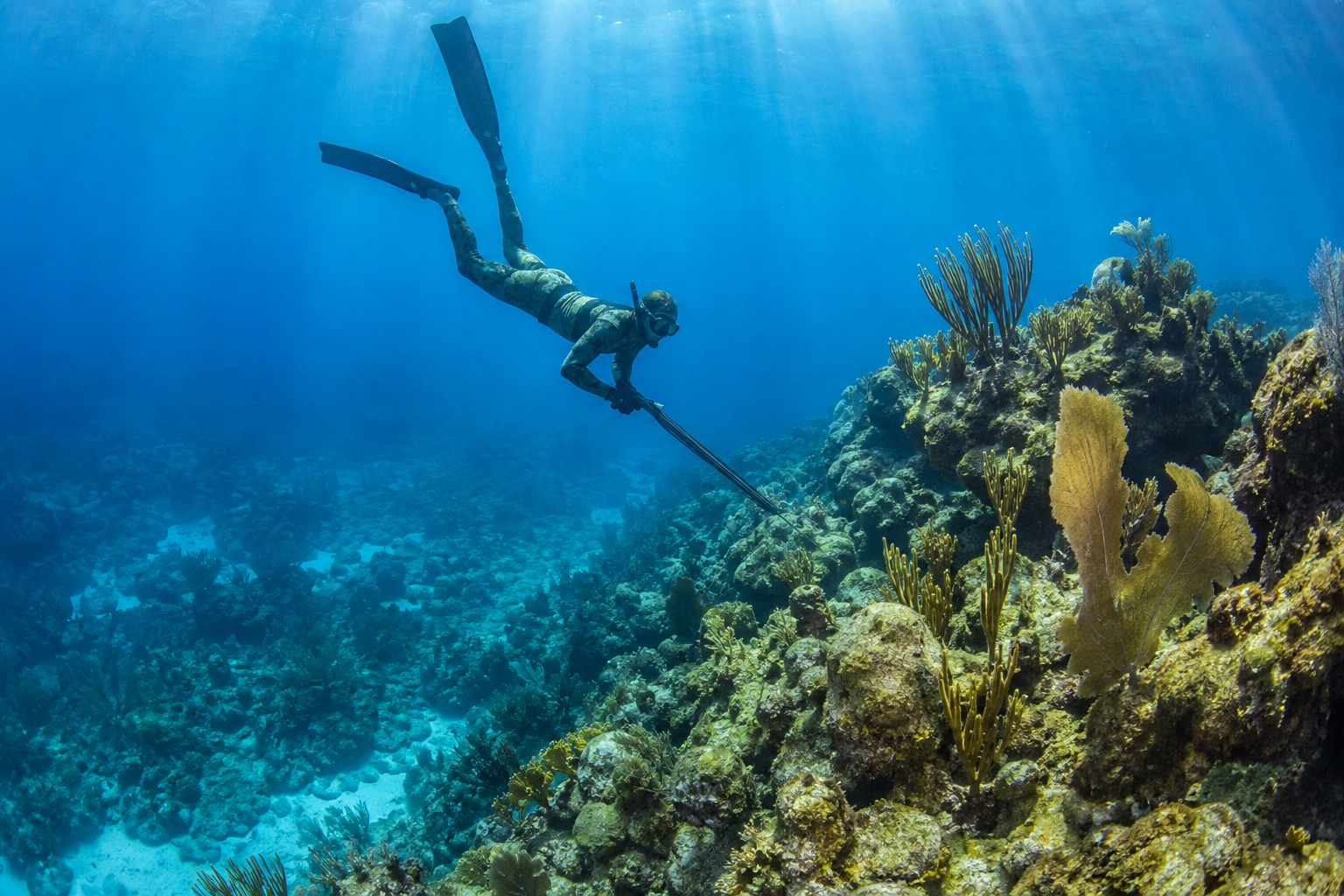
Booking a spearfishing charter in Islamorada is different from booking a regular fishing trip, snorkeling tour, or sightseeing boat ride. Spearfishing is more active, more condition-dependent, and more tied to the experience level of the divers on board.
Islamorada is one of the best areas in the Florida Keys for spearfishing because it offers access to reefs, patch reefs, ledges, wrecks, hard-bottom areas, and offshore water when conditions allow. But the best trip for one group may not be the best trip for another. A beginner reef trip, an advanced wreck dive, a scuba spearfishing charter, and a bluewater spearfishing trip all require different planning.
Before booking, it helps to understand experience level, dive style, trip type, gear, pricing, regulations, and how weather, visibility, and current can affect the day.
Know the Group’s Spearfishing Experience Level
The first thing to consider before booking is experience level. This is not about pride. It is about safety, expectations, and choosing the right type of trip.
A charter should know whether the group includes:
- First-time spearfishing guests
- Strong swimmers or snorkelers
- Novice spearos with a few trips completed
- Certified scuba divers new to spearfishing
- Experienced freedivers
- Advanced spearos looking for wrecks, ledges, or bluewater
- Expert divers with specific target species or structure in mind
Islamorada has options for different skill levels, but not every spot is right for every diver. A strong beginner may have a great day on patch reefs or shallow reef structure. An advanced spearo may want deeper ledges, wrecks, or more selective hunting. The more accurately the group explains its ability, the better the trip can be planned.
Decide Between Freedive and Scuba Spearfishing
Before booking, guests should know whether they want to freedive, scuba dive, or ask the charter which option fits best.
Freedive spearfishing is done on breath-hold. It is quiet, simple, and popular around reefs, patch reefs, shallow ledges, and certain structure. It is a strong fit for divers who are comfortable in the water and enjoy the challenge of breath-hold hunting.
Scuba spearfishing gives divers more bottom time and may open up deeper reefs, ledges, and wrecks. It requires certification, good buoyancy, safe dive planning, and comfort handling gear underwater.
Neither option is automatically better. The right choice depends on experience level, target species, depth comfort, and conditions.
Understand That Spearfishing Is Condition-Dependent
Spearfishing in the Florida Keys depends heavily on conditions. A good charter plan is based on the water that day, not just a fixed destination.
Important conditions include:
- Wind speed and direction
- Visibility
- Current
- Sea state
- Water temperature
- Boat traffic
- Target species
- Diver ability
- Legal harvest rules
A spot that was productive last week may not be the right call today. A responsible charter adjusts based on weather, visibility, current, safety, and what is realistic for the group.
Choose the Right Type of Spearfishing Trip
Islamorada offers several different styles of spearfishing. Before booking, guests should understand what type of trip best fits the group.
Common options include:
- Reef spearfishing
- Patch reef spearfishing
- Ledge spearfishing
- Wreck spearfishing
- Freedive spearfishing
- Scuba spearfishing
- Bluewater spearfishing
- Lionfish spearfishing
Reef and patch reef trips can be a good fit for beginners, novice divers, and mixed groups when conditions are right. Ledge and wreck trips are often better for experienced divers. Bluewater spearfishing is generally best for advanced spearos who are comfortable in open water.
Ask What Is Included
Every spearfishing charter is different. Guests should never assume all gear, tanks, fish cleaning, licenses, or equipment are included.
Before booking, ask about:
- Boat and captain
- Trip length
- Number of guests or divers allowed
- Freedive or scuba options
- Spearguns or pole spears
- Masks, fins, snorkels, and wetsuits
- Scuba tanks, weights, or nitrox
- Cooler and ice
- Fish cleaning
- Fishing licenses or permits
- Food and drinks
- Cancellation and weather policy
Clear answers before the trip help prevent confusion at the dock.
Understand Spearfishing Charter Pricing
Spearfishing charters usually cost more than basic boat rides or general sightseeing trips because they require specialized planning, dive support, local knowledge, safety awareness, and often a private or small-group format.
Pricing may depend on:
- Half-day, 3/4-day, or full-day trip length
- Private vs. shared trip
- Number of guests
- Freedive vs. scuba
- Gear needs
- Fuel and run distance
- Target species or trip type
- Seasonal demand
The cheapest charter is not always the best value. In spearfishing, the value is often in the captain’s knowledge, safety planning, and ability to match the trip to the group.
Know What to Bring
Even when a charter provides some equipment, guests should come prepared.
Common items to bring include:
- Swimsuit
- Towel
- Sun protection
- Food and drinks
- Personal dive gear if available
- Certification card if scuba diving
- Seasickness medication if needed
- Dry bag for personal items
- Change of clothes
- Any required license or documentation
Divers who own a mask, fins, snorkel, wetsuit, speargun, pole spear, or weight belt should ask whether to bring it. Personal gear that fits well is often better than unfamiliar rental gear.
Understand Florida Spearfishing Regulations
Florida Keys spearfishing regulations matter. Species rules, size limits, bag limits, closed seasons, gear restrictions, and protected areas can change. Some areas are closed to spearfishing or harvest.
Before harvesting fish, guests should understand:
- What species are legal
- What species are protected
- Size limits
- Bag limits
- Closed seasons
- Marine protected areas
- Gear restrictions
- Federal vs. state rules
This page is general information only and is not legal advice. Always verify current regulations with official Florida Fish and Wildlife Conservation Commission resources before a trip. When in doubt, do not shoot.
Be Realistic About Target Species
It is fine to have target species in mind, but spearfishing is not a guaranteed harvest activity. Conditions, regulations, pressure, season, and diver ability all affect what is realistic.
Common target species around Islamorada and the Florida Keys may include:
- Hogfish
- Snapper
- Mutton snapper
- Mangrove snapper
- Grouper when legal and in season
- Cobia
- Amberjack
- Mahi
- Wahoo
- Lionfish
A responsible charter will be honest about what is possible. Be cautious of any operator promising specific fish before seeing the conditions.
Private vs. Shared Spearfishing Charters
Private charters are usually better for spearfishing because the trip can be built around one group’s goals and ability level. This matters more in spearfishing than many other charter types.
Private trips make it easier to plan around:
- Experience level
- Freedive or scuba preference
- Target species
- Depth comfort
- Gear needs
- Safety
- Weather windows
- Trip pace
Shared or split charters may cost less, but they can be harder to manage if divers have different skill levels or expectations.
Ask the Right Questions Before Booking
Before choosing a spearfishing charter in Islamorada, guests should ask direct questions.
Good questions include:
- Do you run true spearfishing charters or general fishing trips?
- Do you support freedive, scuba, or both?
- What experience level is this trip best for?
- What is included in the price?
- What gear should guests bring?
- What species are realistic for this time of year?
- How do you handle weather and poor visibility?
- Do you clean the fish?
- How many divers can be in the water?
- Do you follow current Florida Keys spearfishing regulations?
The way a charter answers these questions says a lot about how the trip will be run.
Choose a Charter With Local Knowledge
Local knowledge is one of the biggest advantages in the Florida Keys. Good spearfishing is not just about having coordinates. It is about understanding how different spots behave in different wind, tide, current, visibility, and seasonal patterns.
An experienced Islamorada spearfishing charter should understand:
- Reefs
- Patch reefs
- Ledges
- Wrecks
- Hard-bottom areas
- Bluewater conditions
- Legal harvest
- Boat positioning
- Diver safety
- When to change plans
That judgment is one of the most important parts of a successful trip.
Book the Right Spearfishing Charter
The best spearfishing charter in Islamorada is the one that matches the group’s ability, goals, and conditions on the day of the trip. Beginners need patience and clear instruction. Novice divers need guidance and realistic structure. Advanced spearos need local knowledge, flexibility, and a captain who understands serious spearfishing.
Before booking, guests should be honest about experience, ask what is included, understand the regulations, and choose a charter that communicates clearly.
A well-run spearfishing charter should feel organized before anyone steps on the boat. That is usually one of the strongest signs that the trip is being handled the right way.