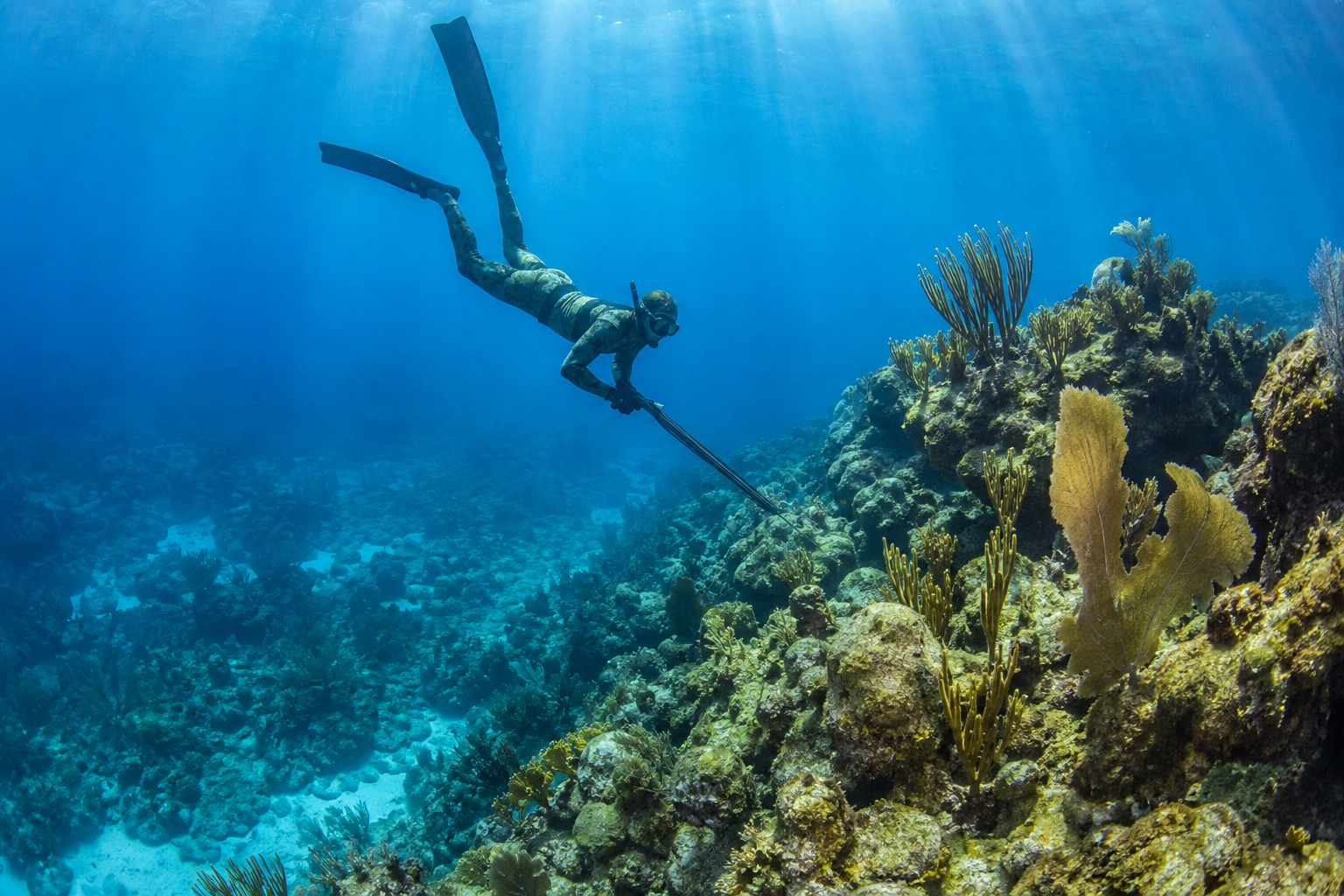
Choosing the right spearfishing charter is different from booking a regular fishing trip, snorkeling tour, or sandbar boat. Spearfishing is more specialized. The right charter needs to understand diving, fish behavior, regulations, reef structure, weather, current, visibility, and how to match the trip to the people on board.
In Islamorada and the Florida Keys, there are plenty of boats on the water. Some are excellent fishing charters. Some are great family boats. Some focus on snorkeling, diving, lobster, or sandbar trips. Not every charter is built for spearfishing.
The best spearfishing charter is usually not the cheapest, biggest, or flashiest option. It is the charter that understands the water, communicates clearly, follows regulations, and builds the trip around safety, legal harvest, and realistic conditions.
Choose a True Spearfishing Charter, Not Just a Fishing Boat
Not every fishing charter is set up for spearfishing. A boat that is great for rod-and-reel fishing may not be prepared to support divers safely in the water.
A true spearfishing charter should understand:
- Boat positioning for divers
- Dive flags and diver safety
- Freedive and/or scuba planning
- Reef, ledge, wreck, and patch reef structure
- Legal target species
- Fish handling after harvest
- Current, visibility, and weather patterns
- How to match sites to experience level
Spearfishing requires a different mindset than fishing from the boat. The captain needs to think like a dive operator and a fisherman at the same time.
Look for Local Florida Keys Knowledge
Local knowledge matters more in spearfishing than most visitors realize. In the Florida Keys, conditions can change quickly. A reef that looked perfect yesterday may be dirty today. A ledge that usually holds fish may not be worth diving if the current is wrong. A wreck may be too rough, too crowded, or too deep for the group.
A good Islamorada spearfishing charter should understand:
- Wind direction and how it affects visibility
- Current around reefs, ledges, and wrecks
- Seasonal fish movement
- Productive structure
- Safe backup plans
- Protected areas and local regulations
- Which areas fit different experience levels
Coordinates alone do not make a good charter. Judgment does.
Make Sure They Understand Experience Level
A strong charter will ask about experience before the trip. That is a good sign. The trip should be planned differently for a beginner, novice spearo, certified scuba diver, advanced freediver, or expert spearfisherman.
Before booking, guests should be ready to explain:
- Whether they freedive or scuba
- Comfortable depth range
- Spearfishing experience
- Swimming ability
- Whether they have their own gear
- Comfort level with current
- Target species or trip goals
- Whether they need instruction or just boat support
If a charter treats every group the same, that is a concern. A beginner reef trip and an advanced wreck trip should not be planned the same way.
Ask About Freedive and Scuba Options
Some spearfishing charters focus on freediving. Others support scuba spearfishing. Some may offer both, depending on the group and the conditions.
Before booking, ask:
- Do you allow freedive spearfishing?
- Do you support scuba spearfishing?
- Are tanks, weights, or nitrox included?
- Do divers need certification cards?
- What depths are typical?
- Are trips planned differently for freedive vs. scuba groups?
Freedive and scuba spearfishing are very different. The right charter should be clear about what they offer.
Look for Private or Small-Group Options
Spearfishing is usually better on a private or small-group charter. Unlike standard sightseeing or party boat trips, spearfishing depends heavily on the ability and goals of the divers on board.
Private charters are better for:
- Matching the trip to the group
- Choosing appropriate depths
- Adjusting to weather and visibility
- Focusing on specific target species
- Keeping safety communication clear
- Avoiding mismatched experience levels
- Giving serious spearos a more productive day
Shared trips may be cheaper, but they can be difficult when one diver wants advanced structure and another needs beginner instruction.
Check for Clear Pricing and What Is Included
A good charter should be upfront about pricing and what is included. Spearfishing trips can vary based on length, number of divers, gear, scuba needs, fuel, and target areas.
Ask about:
- Half-day, 3/4-day, and full-day options
- Private charter cost
- Number of divers allowed
- Gear included
- Scuba tanks or nitrox
- Spearguns or pole spears
- Fish cleaning
- Cooler and ice
- License details
- Weather cancellation policy
Clear pricing helps avoid confusion. If the price seems unusually low, ask what is not included.
Review Real Spearfishing Photos
Photos matter. A charter that regularly runs spearfishing trips should be able to show real divers, real fish, real water, and real Florida Keys conditions.
Look for photos that show:
- Spearfishing catches
- Reef, wreck, or ledge diving
- Divers in the water
- Proper gear
- Clean boat setup
- Fish being handled responsibly
- Local Florida Keys scenery
Be careful if the site only shows generic boat photos or stock-looking images. A serious spearfishing charter should have proof that it actually runs this type of trip.
Read Reviews Carefully
Reviews can tell a lot, but it is important to look beyond the star rating. Read what people actually say.
Good signs include mentions of:
- Safety
- Local knowledge
- Clear communication
- Good conditions planning
- Helpful instruction
- Realistic expectations
- Fish cleaning
- Private trip quality
- Experience level matching
If every review only talks about a fun boat ride, snorkeling, or general fishing, that does not mean the charter is bad. It just may not prove they are strong at spearfishing.
Ask About Target Species
If there is a target species in mind, ask about it before booking. A good charter will explain what is realistic, what is legal, and what depends on season or conditions.
Common Florida Keys spearfishing targets may include:
- Hogfish
- Snapper
- Mutton snapper
- Mangrove snapper
- Grouper when legal and in season
- Cobia
- Amberjack
- Mahi
- Wahoo
- Lionfish
Be cautious if a charter guarantees a specific fish. In spearfishing, no honest operator can control weather, visibility, fish behavior, or regulations.
Make Sure They Know the Regulations
Florida Keys spearfishing regulations are serious. Species rules, size limits, bag limits, closed seasons, gear restrictions, and protected areas can change.
A responsible spearfishing charter should understand:
- Current FWC rules
- Legal target species
- Closed seasons
- Protected species
- Marine protected areas
- Bag and size limits
- Gear restrictions
- Federal and state waters
This page is general information only and not legal advice. Always confirm current regulations with official Florida Fish and Wildlife Conservation Commission resources before harvesting fish.
Safety Should Be Part of the Conversation
If safety never comes up before booking, that is a red flag. Spearfishing involves sharp equipment, current, boat traffic, depth, breath-hold diving, scuba planning, fish handling, and changing weather.
A good charter should care about:
- Experience level
- Dive style
- Current and visibility
- Buddy awareness
- Dive flag use
- Speargun safety
- Boat positioning
- Weather windows
- Emergency planning
- When to change plans
The right captain should be willing to say that a certain spot, depth, or trip type is not the best plan if conditions do not support it.
Look for Honest Expectations
The best spearfishing charters do not oversell. They explain what is possible, what is condition-dependent, and what may need to change.
Honest expectations might sound like:
- “Spots are chosen based on visibility and current.”
- “That target species depends on season and regulations.”
- “That wreck is only worth diving if conditions are right.”
- “For this group, patch reefs may be a better fit than deep structure.”
- “If the weather changes, the plan will adjust.”
That kind of honesty is a good thing. Spearfishing is not a scripted theme park ride. Conditions decide a lot.
Avoid Charters That Promise Everything
Be careful with any charter that claims to do everything equally well: fishing, snorkeling, sandbar trips, sunset cruises, scuba, freedive, bluewater, beginner trips, expert trips, wrecks, trophies, and guaranteed fish.
Some operators are truly versatile, but spearfishing is specialized. If the offer sounds too broad, ask specific questions.
A serious charter should be able to explain:
- What types of spearfishing they actually run
- What experience levels they work with
- What gear is needed
- What conditions they look for
- What species are realistic
- What areas are legal and safe
- What happens if visibility is poor
Specific answers matter more than big claims.
Consider Communication Before the Trip
The way a charter communicates before the trip often reflects how the trip will go. Good communication helps set expectations and prevents surprises.
A strong charter should be able to answer:
- Where do guests meet?
- What time does the trip leave?
- What should guests bring?
- What is included?
- What happens if weather is bad?
- What experience level is required?
- Can the group freedive or scuba?
- What species are realistic?
- How many people can go?
- How many divers can be in the water?
If communication is vague before payment, that is worth paying attention to.
Choosing the Right Charter for Beginners
Beginners should look for a charter that is patient, safety-focused, and realistic. The goal should be learning the sport correctly, not being pushed into conditions beyond the group’s comfort level.
A beginner-friendly charter should offer:
- Clear safety instruction
- Shallow or manageable sites when conditions allow
- Gear guidance
- Fish identification help
- Legal harvest guidance
- Private or small-group structure
- Honest expectations
Beginner spearfishing can be a great experience when it is planned correctly.
Choosing the Right Charter for Advanced Spearos
Advanced spearos usually need a different kind of charter. They may already have gear, know their targets, and want access to better structure or more challenging water.
Advanced divers should look for:
- Real spearfishing experience
- Knowledge of ledges, wrecks, reefs, and bluewater
- Ability to plan around current and visibility
- Private trip options
- Honest condition calls
- Strong boat support
- Understanding of target species and regulations
- Willingness to customize the day
For advanced spearos, the value is often in local knowledge and flexibility.
Book the Charter That Matches the Trip
The best spearfishing charter is not always the cheapest, flashiest, or most aggressive online. It is the charter that understands the water, communicates clearly, respects safety, follows regulations, and matches the trip to the divers on board.
Before booking a spearfishing charter in Islamorada or the Florida Keys, look for real local knowledge, real spearfishing experience, clear pricing, honest expectations, and a captain who understands both diving and fishing.
A good charter should make guests feel prepared before the trip and supported once they are in the water. That is what separates a true spearfishing charter from a regular boat ride.