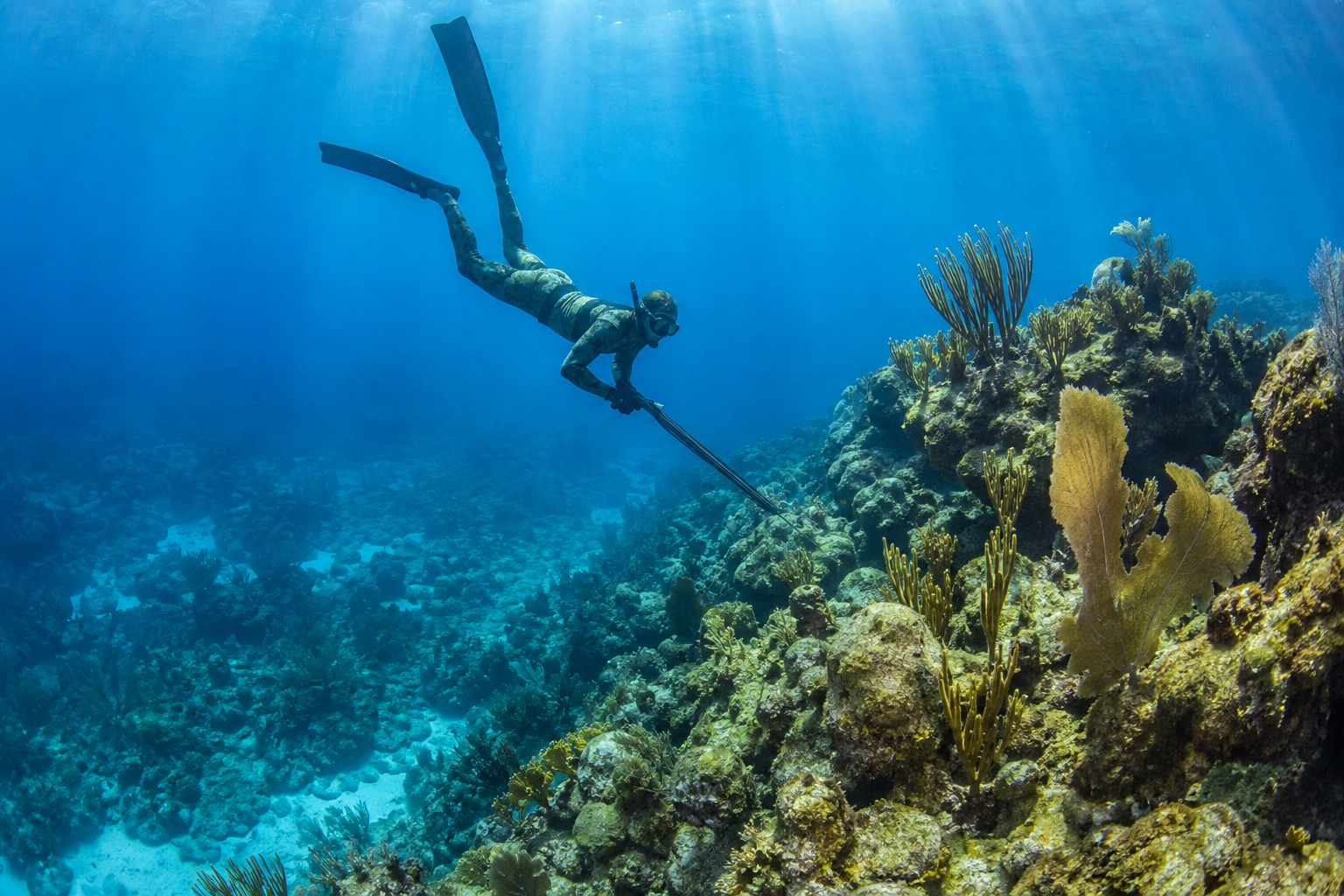
Lionfish spearfishing in Islamorada is one of the most unique types of spearfishing in the Florida Keys. Unlike many reef fish, lionfish are invasive, aggressive predators that can harm native reef ecosystems. Removing them from Florida Keys waters is widely encouraged because lionfish eat juvenile reef fish and have very few natural predators in the Atlantic.
For divers, lionfish hunting offers a different kind of trip. It is active, hands-on, and conservation-minded. Instead of only focusing on trophy fish, a lionfish spearfishing charter gives divers a chance to help protect the reef while still enjoying a productive day in the water.
Islamorada and the Upper Florida Keys offer access to reefs, patch reefs, ledges, wrecks, hard-bottom areas, and other structure where lionfish may be found. Conditions vary by weather, visibility, current, depth, and diver experience, so booking with a local charter can make the trip safer and more effective.
Private Lionfish Spearfishing Charters in Islamorada
Private lionfish spearfishing charters are often a good fit for divers who want a focused trip. A private boat allows the captain to plan around your group’s experience level, preferred dive style, target areas, and the day’s conditions.
A private lionfish spearfishing charter may be a good fit for:
- Certified scuba divers
- Freedivers
- Experienced spearos
- Strong beginners with ocean comfort
- Small private groups
- Divers interested in reef conservation
- Visitors looking for a hands-on Florida Keys diving experience
- People who want to harvest an invasive species
Lionfish trips can be especially useful for divers who want a meaningful charter experience beyond a standard sightseeing dive or fishing trip.
Why Lionfish Are Targeted in the Florida Keys
Lionfish are not native to Florida waters. They are considered invasive because they reproduce quickly, eat native juvenile fish and crustaceans, and can disrupt reef ecosystems. The Florida Keys National Marine Sanctuary describes lionfish as one of the Keys’ most damaging invasive species, noting that they feed on native fish and crustaceans and can spawn year-round. (Wikipedia)
Because of this, lionfish removal is encouraged by conservation groups, divers, and Florida wildlife agencies. The Florida Fish and Wildlife Conservation Commission has also promoted organized lionfish removal efforts such as the Lionfish Challenge to encourage divers to harvest lionfish. (Axios)
For spearfishers, that means lionfish hunting can be both productive and helpful to the reef.
Where Lionfish Are Found Around Islamorada
Lionfish can be found around many types of underwater structure. They often hold close to cover and may tuck into reef holes, ledges, wrecks, and hard-bottom habitat.
Lionfish may be found around:
- Reefs
- Patch reefs
- Ledges
- Wrecks
- Coral heads
- Hard-bottom areas
- Artificial structure
- Deeper dive sites
They are often easier to approach than many native reef fish, but they can be difficult to spot because they blend into structure. A trained eye and local knowledge can make a big difference.
Lionfish Spearfishing on Reefs, Wrecks, and Ledges
Lionfish hunting can happen in several different environments around Islamorada.
Reef Lionfish Spearfishing
Reefs and patch reefs are common places to look for lionfish. Divers may search around coral heads, small holes, reef edges, and hard-bottom areas. Good buoyancy and careful movement are important to avoid damaging coral.
Wreck Lionfish Spearfishing
Wrecks can hold lionfish, especially around edges, cracks, shaded areas, and lower structure. Wreck diving may require more experience because of depth, current, boat traffic, and dive planning.
Ledge Lionfish Spearfishing
Ledges are another productive place to look. Lionfish may hold under overhangs, along cuts, or near natural cover. Ledge hunting rewards careful searching and good bottom awareness.
Scuba Lionfish Spearfishing in Islamorada
Scuba is often a strong option for lionfish hunting because divers have more bottom time to search structure carefully. Lionfish may be tucked under ledges, inside reef holes, or around deeper structure where extra bottom time helps.
Scuba lionfish spearfishing may be a good fit for certified divers who are comfortable with:
- Buoyancy control
- Reef awareness
- Fish identification
- Safe pole spear handling
- Lionfish containment tools
- Depth and gas management
- Working around structure
Because lionfish are venomous, divers should also understand safe handling before the trip.
Freedive Lionfish Spearfishing in Islamorada
Freedive lionfish spearfishing can also be an option when lionfish are found in depths that match the divers’ ability. Freedivers rely on breath-hold diving, efficient searching, and safe buddy practices.
Freedive lionfish trips may be a good fit for:
- Experienced freedivers
- Strong swimmers
- Intermediate spearos
- Divers comfortable around reef structure
- Small groups with similar ability levels
Freedivers should stay within their comfort zone and avoid pushing depth or bottom time just to reach a fish.
Common Gear for Lionfish Spearfishing
Lionfish are usually hunted with specialized, close-range gear rather than large spearguns. Exact gear depends on the charter and diver preference.
Common lionfish gear may include:
- Pole spear
- Lionfish spear tip
- Zookeeper-style containment tube
- Gloves
- Dive knife
- Mesh or puncture-resistant collection bag
- Dive flag
- Mask, fins, and snorkel
- Scuba gear if diving on tanks
- Exposure protection
A containment device is important because lionfish have venomous spines and should not be handled casually.
Are Lionfish Dangerous?
Lionfish are not usually aggressive toward divers, but their spines are venomous and can cause painful stings. Most injuries happen when divers handle lionfish carelessly after harvesting them.
Important safety tips include:
- Do not grab lionfish with bare hands
- Use proper containment tools
- Avoid contact with dorsal, pelvic, and anal spines
- Keep harvested lionfish away from other divers
- Handle fish carefully on the boat
- Know basic first-aid procedures for stings
A good lionfish spearfishing charter should explain safe handling before the trip.
Can You Eat Lionfish?
Yes, lionfish are widely eaten and are considered good table fare when cleaned properly. Many people describe lionfish as mild, white, and flaky.
The venom is in the spines, not the meat. Once the spines are removed and the fish is cleaned correctly, lionfish can be cooked like many other reef fish. Guests should still let an experienced person clean them if they are unfamiliar with handling lionfish.
Lionfish Regulations in Florida
Lionfish regulations are different from many native reef species because lionfish are invasive and removal is encouraged. However, rules can change, and regulations may vary by area, gear, and protected zones.
This page is for general information only and should not be treated as legal advice. Always verify current rules with the Florida Fish and Wildlife Conservation Commission before harvesting fish. FWC is the official agency that manages and regulates Florida fish and wildlife resources. (Wikipedia)
A responsible lionfish spearfishing charter should help guests understand:
- Where lionfish harvest is allowed
- What gear is permitted
- Whether a license is required
- Any sanctuary or protected-area rules
- Safe handling requirements
- Current Florida regulations
When in doubt, check FWC before the trip.
Why Book a Lionfish Spearfishing Charter?
Lionfish hunting is different from regular spearfishing. It requires patience, careful searching, safe handling, and the right tools. A local charter can help divers find appropriate habitat, understand the conditions, and avoid wasting time in unproductive areas.
A lionfish spearfishing charter may be worthwhile because it offers:
- A conservation-focused dive
- Active reef hunting
- A chance to harvest an invasive species
- Good practice with pole spear accuracy
- More bottom-focused searching
- A different experience than standard reef fishing
- Potential table fare after the trip
For many divers, lionfish hunting is rewarding because every fish removed helps reduce pressure on native reef species.
Choosing the Best Lionfish Spearfishing Charter in Islamorada
Not every charter is set up for lionfish hunting. A good lionfish charter should understand both diving and safe lionfish removal.
When comparing Islamorada lionfish spearfishing charters, look for:
- Experience finding and harvesting lionfish
- Knowledge of reefs, ledges, wrecks, and hard bottom
- Proper lionfish handling tools
- Clear safety expectations
- Private charter options
- Transparent pricing
- Understanding of local regulations
- Good communication before the trip
- Ability to adjust based on visibility, current, and weather
The best charter is not just the one that says lionfish are easy to shoot. It is the one that knows how to plan a safe, legal, and productive trip.
Lionfish Spearfishing Near Islamorada, Tavernier, and Key Largo
Many visitors searching for lionfish spearfishing in Islamorada also look at nearby Upper Keys areas. Depending on marina location, weather, and dive conditions, trips may serve divers staying near:
- Islamorada
- Tavernier
- Plantation Key
- Windley Key
- Key Largo
- Upper Florida Keys
- Florida Keys reef tract
The best area for a lionfish trip depends on visibility, current, depth, and the type of structure being searched.
Is Lionfish Spearfishing in Islamorada Worth It?
For many divers, lionfish spearfishing in Islamorada is worth it because it combines diving, conservation, and harvest. It can be a good fit for certified scuba divers, freedivers, experienced spearos, and strong beginners who are comfortable in the water.
It may not be the right trip for someone who wants big-game spearfishing or a passive boat ride. But for divers who want to help the reef and enjoy an active underwater hunt, a private lionfish spearfishing charter can be a memorable Florida Keys experience.
Plan a Lionfish Spearfishing Charter in Islamorada
If you are planning a lionfish spearfishing charter in Islamorada, start by thinking about your experience level, preferred dive style, gear needs, and comfort around reef structure. Let the charter know whether you plan to freedive or scuba, whether you have your own gear, and whether you have handled lionfish before.
Islamorada offers access to reefs, patch reefs, ledges, wrecks, and hard-bottom areas where lionfish may be found. With the right local captain, proper tools, safe handling, and good conditions, lionfish spearfishing can be one of the most useful and rewarding ways to dive in the Florida Keys.